
Amna Suraka: Sulaymaniyah's Red Museum, Explained
Amna Suraka means "Red Security" in Kurdish. Locals just call it the Red Building. It sits a few minutes from the city center, inside a former Ba'ath intelligence headquarters, and it isn't a museum in the usual sense. It's the building itself, left close to how it was found in March 1991, after Kurdish fighters and residents took it during the uprising that followed the Gulf War.
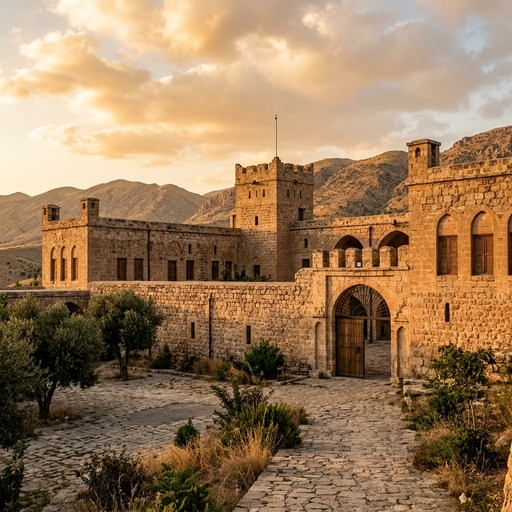
What Amna Suraka actually was
Before 1991, the complex functioned as the regional headquarters of Iraq's General Security Directorate for Sulaymaniyah province. It processed, interrogated, and often disappeared people suspected of Kurdish nationalist activity, going back through the 1970s and into the worst years of the Anfal campaign in 1988. Estimates of how many people passed through its cells vary, but Kurdish human rights researchers who've documented the site put the number in the thousands over the building's operational life.
When the 1991 uprising reached Sulaymaniyah, residents and Peshmerga fighters overran the complex within days. Rather than demolish it, the newly formed Kurdistan Regional Government made a deliberate choice in the years that followed: leave the building standing, and let it document what happened rather than erase it. That decision is why Amna Suraka reads less like a curated exhibition and more like a crime scene left in place.
The Anfal campaign, briefly
Understanding Amna Suraka means understanding what it's actually documenting. The Anfal campaign ran through 1988, in the final stretch of the Iran-Iraq War, as a military operation against the Kurdish population of northern Iraq. Human rights organizations that investigated it afterward, including groups that testified before international bodies, documented mass destruction of villages, forced displacement, and chemical weapons use, most infamously in the town of Halabja in March 1988.
Amna Suraka wasn't a battlefield site. It was an administrative one: a place where people swept up in the campaign, along with others detained for suspected nationalist sympathies over the preceding decade, were processed and interrogated. That distinction matters for understanding the museum. It isn't documenting combat. It's documenting bureaucracy applied to a campaign of destruction, which is part of why the preserved cells and interrogation rooms carry a different weight than a battlefield memorial would.
Halabja itself has its own dedicated memorial, roughly two hours from Sulaymaniyah by car, and some visitors choose to combine a trip there with Amna Suraka to get a fuller picture of the Anfal period specifically. It's a longer day than most itineraries budget for, so it's worth planning as its own outing rather than an add-on.
Where Slemani Museum ends and Amna Suraka begins
The Slemani Museum covers roughly seven millennia: Neolithic tools, Sumerian tablets, Assyrian reliefs, the full sweep of Mesopotamian civilization moving through what's now Iraqi Kurdistan. Amna Suraka does the opposite. It narrows the lens down to about thirteen years, and it does it through objects rather than artifacts: bullet-scarred walls, cell blocks, and hardware.
A T-55 tank and a MiG-21 fighter jet, both used by Iraqi forces against Kurdish towns during the Anfal campaign, sit in the courtyard as static objects rather than roped-off exhibits. Visitors can walk right up to them. Inside, entire wings of the original building are preserved with minimal intervention: interrogation rooms with the original fittings, cell corridors, and in several rooms, photographs and testimony panels documenting individual cases rather than abstract statistics.
Inside the building: what's actually on display
Past the courtyard, the layout follows the original structure rather than a curated museum path, which is part of what makes a visit feel different from a typical history museum. Corridors of cells run along one wing, most left with their original doors and, in several cases, graffiti scratched into the walls by former detainees. Museum staff have left much of this untouched rather than restoring it, on the reasoning that restoration would undercut the point of the site.
Separate rooms hold photographic exhibits: images from the Anfal campaign itself, from the 1991 uprising that ended the building's use as a detention site, and portraits of specific individuals who passed through it, often paired with short biographical panels. This is where the museum shifts from architecture to something closer to a memorial archive, naming specific people rather than only presenting the building as an artifact.
A smaller section documents the broader chemical weapons attacks of the Anfal period, including material relating to Halabja, displayed alongside first-hand accounts. It's presented with less physical staging than the interrogation wing, mostly text panels and photographs, which some visitors find easier to process after the more visceral experience of walking through the cells themselves.
The Hall of Mirrors
The single most-discussed part of Amna Suraka is a small, dark room built specifically for the museum: the Hall of Mirrors. The walls and ceiling are covered in roughly 182,000 pieces of broken mirror, and the room holds about 5,000 small lightbulbs, one for each village the museum's curators count as destroyed and each life lost during the Anfal campaign.
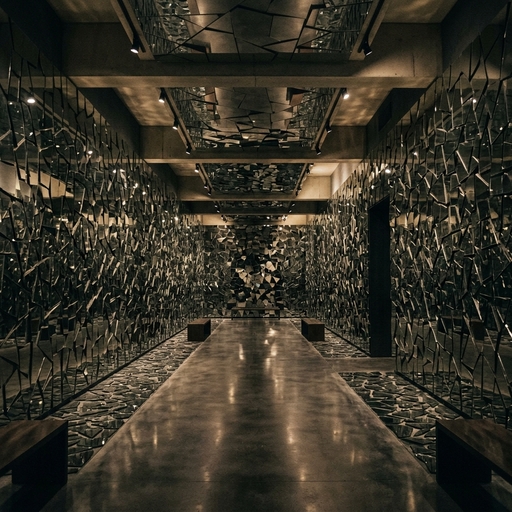
Walking into the room, the first thing that registers isn't the number. It's the reflection. Every visitor sees themselves fractured across thousands of shards, multiplied and scattered. That's the intended effect. The room isn't built to explain a statistic. It's built to make one person feel briefly outnumbered by it, which is a very different kind of understanding than reading a death toll on a plaque.
What to expect if you're sensitive to the subject matter
None of this is comfortable material, and the museum doesn't try to make it comfortable. Restored interrogation rooms, some with original equipment left in place, make up a significant part of the exhibit. Several rooms include recorded testimony from former prisoners, played on loop, in Kurdish with occasional English subtitles.
If you're travelling with children, it's worth knowing what you're walking into before you buy a ticket. There's no separate "family route" that skips the harder material; the building is small enough that most rooms are visible from the main circulation path. Some visitors choose to do a shorter version of the visit for this reason, focusing on the exterior, the Hall of Mirrors, and a handful of the display rooms rather than the full interrogation wing.
Practical details most guides skip
Admission has historically been free under the museum's published policy, though it's worth confirming current hours before you go, since opening times shift seasonally and around local holidays. The site is generally open daily except for specific religious and national holidays.
A full visit, reading the placards and testimony panels rather than walking through quickly, takes 45 minutes to an hour. Photography is generally permitted in the courtyard and most interior rooms, though it's good practice to ask a staff member before photographing anything in the testimony rooms specifically, since some families of survivors have asked that certain material not be widely circulated.
Most visitors pair Amna Suraka with the Slemani Museum on the same day, and the two sites are close enough that walking between them is realistic in good weather. Given Sulaymaniyah's hills and the summer heat, though, a short taxi ride is the more common choice, and it's inexpensive by most visitors' standards.
Getting there and combining it with the rest of your day
Amna Suraka sits close enough to central Sulaymaniyah that most hotels can arrange transport for a small fare, and taxi apps operating in the city cover the route reliably. If you're already at Slemani Museum, the distance is short enough that combining both in a single morning or afternoon is realistic without feeling rushed, provided you're not trying to add a third major site to the same day.
A common pattern among visitors building a full day around Kurdish and Mesopotamian history: Slemani Museum in the morning, lunch somewhere in the city center, then Amna Suraka in the early afternoon before the light starts to fade. Afternoon light works in the museum's favor for photography in the courtyard, where the tank and jet sit exposed to the sky rather than under cover.
How it fits into a wider Kurdistan itinerary
If you're building a trip around Kurdish heritage rather than pure Mesopotamian archaeology, Amna Suraka is the piece the wider museum collection can only point toward from a distance. The Slemani Museum's ethnographic and archaeological holdings give you the long arc of Kurdish and Mesopotamian history. Amna Suraka gives you thirteen specific years of it, in far more direct terms, and the two sites read very differently depending on which order you visit them in.
Some visitors prefer starting at Amna Suraka, on the theory that the emotional weight of it is easier to carry early in the day. Others prefer ending there, treating it as the final, more difficult chapter after a morning spent on older history. There's no wrong order. What matters more is not rushing either site, since both reward slower reading than a typical museum walk-through.
FAQ
Is Amna Suraka appropriate for children?
There's no formal age restriction, but the interrogation rooms and testimony recordings cover imprisonment, violence, and loss directly. Many parents choose to preview the layout themselves first, or focus a family visit on the courtyard, the exterior, and the Hall of Mirrors rather than the full interior route.
How long should I budget for the visit?
Plan for 45 minutes to an hour if you're reading the placards and testimony panels. A faster walk-through, seeing the tank, the jet, and the Hall of Mirrors without reading every panel, can be done in 20 to 30 minutes.
Is photography allowed?
Generally yes in the courtyard and most interior rooms. It's worth checking with staff before photographing the testimony rooms specifically.
Why wasn't the building demolished after 1991?
The Kurdistan Regional Government made a deliberate decision to preserve it as a documentation site rather than tear it down, on the reasoning that the physical evidence of what happened there mattered more as a record than as a symbol to erase.
Should I visit Halabja on the same trip?
It's possible, but Halabja's memorial sits roughly two hours from Sulaymaniyah, which makes it a poor fit for the same day as Amna Suraka and the Slemani Museum. Most visitors treat it as a separate day trip rather than an extension of a Sulaymaniyah city visit.
Is there an entrance fee?
Admission has historically been free under the museum's published policy. It's worth confirming current rates locally before you go, since policies can shift.
