
Kurdish Culture and Heritage: A Journey Through History at Slemani Museum
The Kurdish people are one of the oldest indigenous groups in the Middle East, with a rich cultural heritage spanning thousands of years. At Slemani Museum in Sulaymaniyah, Iraq, this heritage comes alive through rare ethnographic collections, traditional artifacts, and historical records that tell the story of a resilient and vibrant civilization.
Who Are the Kurdish People? Origins and Historical Identity
The Kurds are an Iranian-speaking ethnic group native to a mountainous region historically known as Kurdistan, spanning parts of modern-day Iraq, Iran, Turkey, and Syria. With a population of over 30 million people, they represent one of the largest ethnic groups in the world without a sovereign state of their own.
Archaeological evidence suggests that the ancestors of the Kurdish people have inhabited the Zagros Mountains and surrounding regions for at least 4,000 years. Their cultural identity is deeply rooted in the land, shaped by centuries of interaction with Mesopotamian, Persian, and Ottoman civilizations.
Ancient Roots: Kurdish Ancestors in the Archaeological Record
Excavations across the Kurdistan Region of Iraq have uncovered settlements dating back to the Neolithic period. Sites like Jarmo — one of the earliest known agricultural villages in human history — point to a long and continuous human presence in the region. Artifacts from these sites, many of which are preserved at Slemani Museum, include stone tools, pottery, and early agricultural implements that paint a picture of daily life thousands of years ago.
The Kurdish Language and Its Written History
Kurdish belongs to the northwestern branch of the Iranian language family. It has several dialects, the most widely spoken being Kurmanji (Northern Kurdish) and Sorani (Central Kurdish). The Sorani dialect, written in a modified Arabic script, is the official language of the Kurdistan Region of Iraq and is prominently featured in the museum’s exhibits and publications.
The written history of the Kurdish language dates back several centuries, though oral traditions — including epic poetry, folk tales, and songs — stretch much further into antiquity.
Kurdish Traditional Culture Preserved in Museum Collections
Slemani Museum holds one of the most comprehensive ethnographic collections related to Kurdish culture in the region. These artifacts provide a tangible connection to the customs, crafts, and daily lives of Kurdish communities across different historical periods.
Traditional Clothing and Textiles of Kurdish People
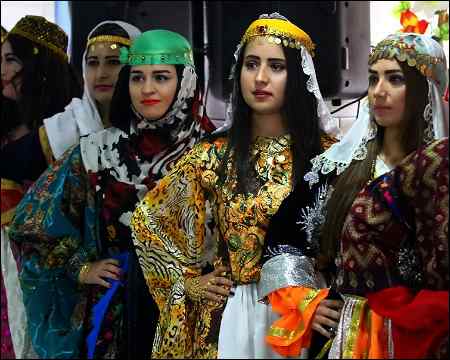
Kurdish traditional dress is one of the most visually distinctive in the Middle East. Men traditionally wear loose trousers (shal), a cummerbund (pashtên), and a turban or headdress that varies by tribe and region. Women’s attire is equally elaborate, often featuring brightly colored silk or cotton dresses adorned with embroidery and jewelry.
The museum’s textile collection includes garments and accessories from different regions of Kurdistan, each reflecting local weaving techniques, dye traditions, and symbolic patterns passed down through generations.
Music, Folklore, and Oral Traditions
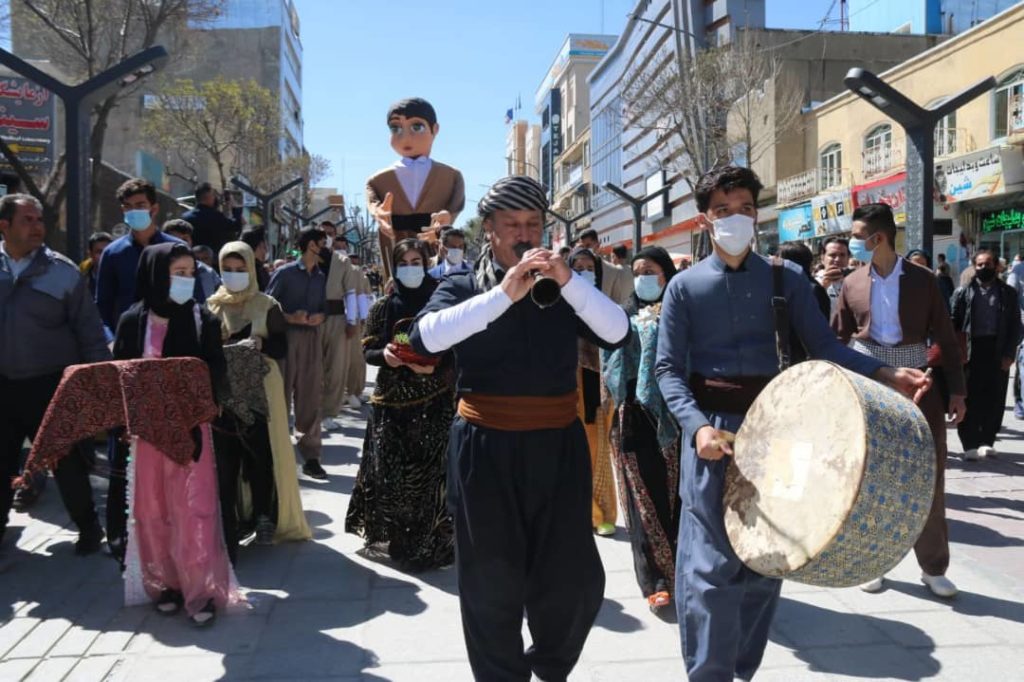
Music is central to Kurdish cultural identity. Traditional instruments include the tembûr (a long-necked lute), the daf (a frame drum), and the shamshal (a flute). Kurdish musical genres range from the maqam — a form of classical music — to dengbêj, a tradition of epic oral storytelling performed by singer-poets known as dengbêjs.
These oral traditions were historically the primary means of preserving Kurdish history, genealogy, and cultural values, particularly during periods when written expression was suppressed.
Kurdish Crafts and Everyday Objects Through the Centuries
Kurdish artisanal traditions include carpet and kilim weaving, metalwork, woodcarving, and pottery. Kurdish carpets are especially renowned, characterized by geometric patterns, bold colors, and symbolic motifs with deep cultural meaning. The museum’s collection of everyday objects — from kitchen utensils to agricultural tools — reflects the ingenuity and resourcefulness of Kurdish communities living in often challenging mountain environments.
Kurdish Identity Under Different Empires
Throughout history, Kurdish lands have been ruled by successive empires, each leaving its mark on Kurdish culture while the Kurds maintained a distinct identity.
Kurds Under Ottoman Rule
For nearly four centuries, much of Kurdistan fell under Ottoman administration. The Ottoman period brought both conflict and cultural exchange. Kurdish tribal leaders often maintained significant autonomy, and the region became a crossroads for trade, scholarship, and religious influence. The 19th century saw the rise of Kurdish nationalist sentiment, partly in response to Ottoman centralization policies.
Kurdish Culture in the 20th Century
The 20th century was a turbulent period for the Kurdish people. The collapse of the Ottoman Empire after World War I raised hopes for a Kurdish state, but the Treaty of Lausanne in 1923 left Kurds without recognized borders. Decades of conflict, displacement, and cultural suppression followed in various countries. Despite this, Kurdish culture proved resilient — language, music, literature, and traditions survived and eventually flourished, particularly in the Kurdistan Region of Iraq following the 1991 Gulf War.
What You Can See at Slemani Museum
Slemani Museum offers visitors a unique window into Kurdish cultural history through its dedicated ethnographic galleries and rotating exhibitions.
Ethnographic Gallery: A Walk Through Kurdish Daily Life
The ethnographic gallery features reconstructed scenes of traditional Kurdish homes, complete with period furniture, textiles, and tools. Visitors can explore how Kurdish families lived, worked, and celebrated across different historical periods. Special exhibits highlight the role of women in Kurdish society, traditional healing practices, and the significance of communal celebrations like Nowruz — the Kurdish and Persian New Year.
How to Plan Your Visit to Sulaymaniyah
Slemani Museum is located in the heart of Sulaymaniyah city in the Kurdistan Region of Iraq. The museum is open Saturday through Thursday from 9:00 AM to 1:00 PM. Admission is free for all visitors. The city of Sulaymaniyah is accessible via Sulaymaniyah International Airport, with regular flights from Baghdad, Erbil, and several international destinations.
Frequently Asked Questions About Kurdish History
What language do Kurdish people speak?
Kurdish people primarily speak Kurmanji and Sorani dialects of the Kurdish language, which belongs to the Iranian branch of the Indo-European language family.
How old is Kurdish culture?
Kurdish cultural roots extend back thousands of years, with archaeological evidence of their ancestors in the Zagros Mountains region dating to the Neolithic period, approximately 7,000–10,000 years ago.
Is Slemani Museum free to visit?
Yes, admission to Slemani Museum is free for all visitors. The museum is open Saturday through Thursday, 9:00 AM to 1:00 PM.
What artifacts related to Kurdish culture does Slemani Museum have?
The museum holds traditional Kurdish clothing, textiles, jewelry, musical instruments, pottery, agricultural tools, and reconstructed domestic scenes representing Kurdish life across different historical periods.
