
Mesopotamian Civilizations: From Sumer to Assyria — Artifacts at Slemani Museum
Mesopotamia — the land between the Tigris and Euphrates rivers — gave birth to some of the most extraordinary civilizations in human history. From the invention of writing to the first codified laws, the achievements of Sumer, Babylon, and Assyria shaped the foundations of modern society. Slemani Museum in Sulaymaniyah, Iraq, preserves a remarkable collection of artifacts that bring these ancient worlds to life.
What Is Mesopotamia? The Cradle of Civilization
The term “Mesopotamia” comes from the ancient Greek words for “land between the rivers,” referring to the fertile region between the Tigris and Euphrates rivers in modern-day Iraq and parts of Syria and Turkey. This region is widely regarded as the cradle of civilization — the place where humans first developed agriculture, cities, writing, and complex governance.
Geography and Climate of Ancient Mesopotamia
Ancient Mesopotamia encompassed two distinct ecological zones: the flat, alluvial plains of the south (Lower Mesopotamia), where the great cities of Sumer and Babylon arose, and the rolling hills and mountains of the north (Upper Mesopotamia and the Zagros foothills), closer to the Kurdistan Region. The region’s rivers provided essential water for irrigation, enabling agricultural surpluses that supported growing urban populations.
The First Cities in Human History
Around 4000–3000 BCE, the world’s first true cities emerged in southern Mesopotamia. Uruk, Ur, and Eridu were among the earliest urban centers, featuring monumental temples (ziggurats), organized trade networks, and complex administrative systems. These cities required new tools for management — and from that need, writing was born.
Sumerian Civilization and Its Legacy
The Sumerians were the earliest known civilization in Mesopotamia, flourishing from approximately 4500 to 1900 BCE. Their contributions to human history are immeasurable — from the invention of the wheel to the creation of the world’s first written literature.
The Invention of Writing: Cuneiform Tablets at Slemani Museum
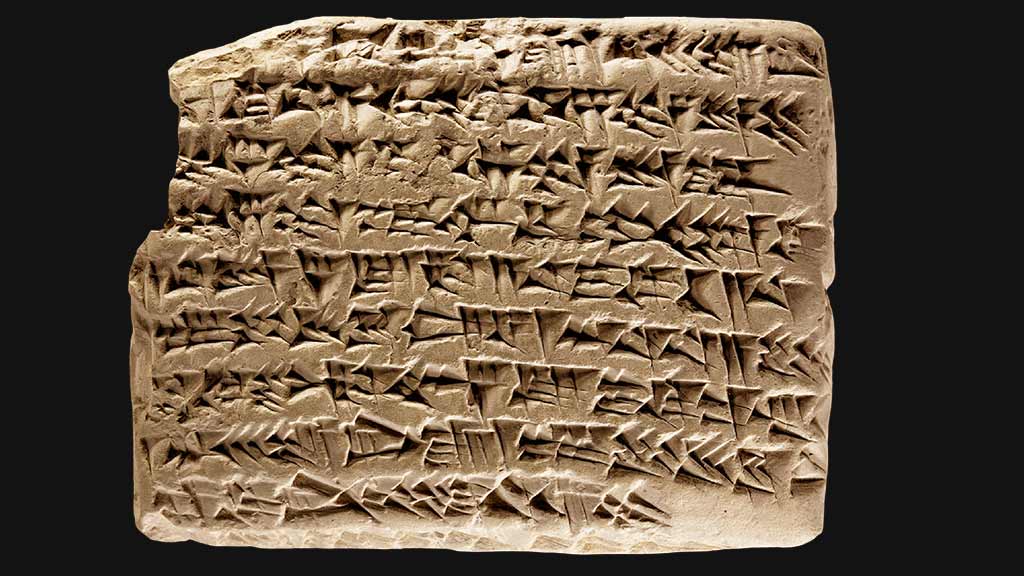
Cuneiform — from the Latin cuneus meaning “wedge” — was the world’s first writing system, developed by the Sumerians around 3200 BCE. Initially used for accounting and trade records, it evolved into a sophisticated script capable of recording literature, law, and science. Slemani Museum holds several cuneiform tablets in its collection, offering visitors a direct connection to the dawn of written human communication.
Sumerian Religion, Gods, and Mythology
The Sumerians worshipped a vast pantheon of gods, each associated with natural forces and aspects of civilization. Among the most important were Anu (god of the sky), Enlil (god of wind and storms), and Inanna (goddess of love and war). The Epic of Gilgamesh — one of the oldest works of literature in human history — originated in Sumerian oral tradition and tells the story of a semi-divine king’s quest for immortality.
Sumerian Art and Architecture
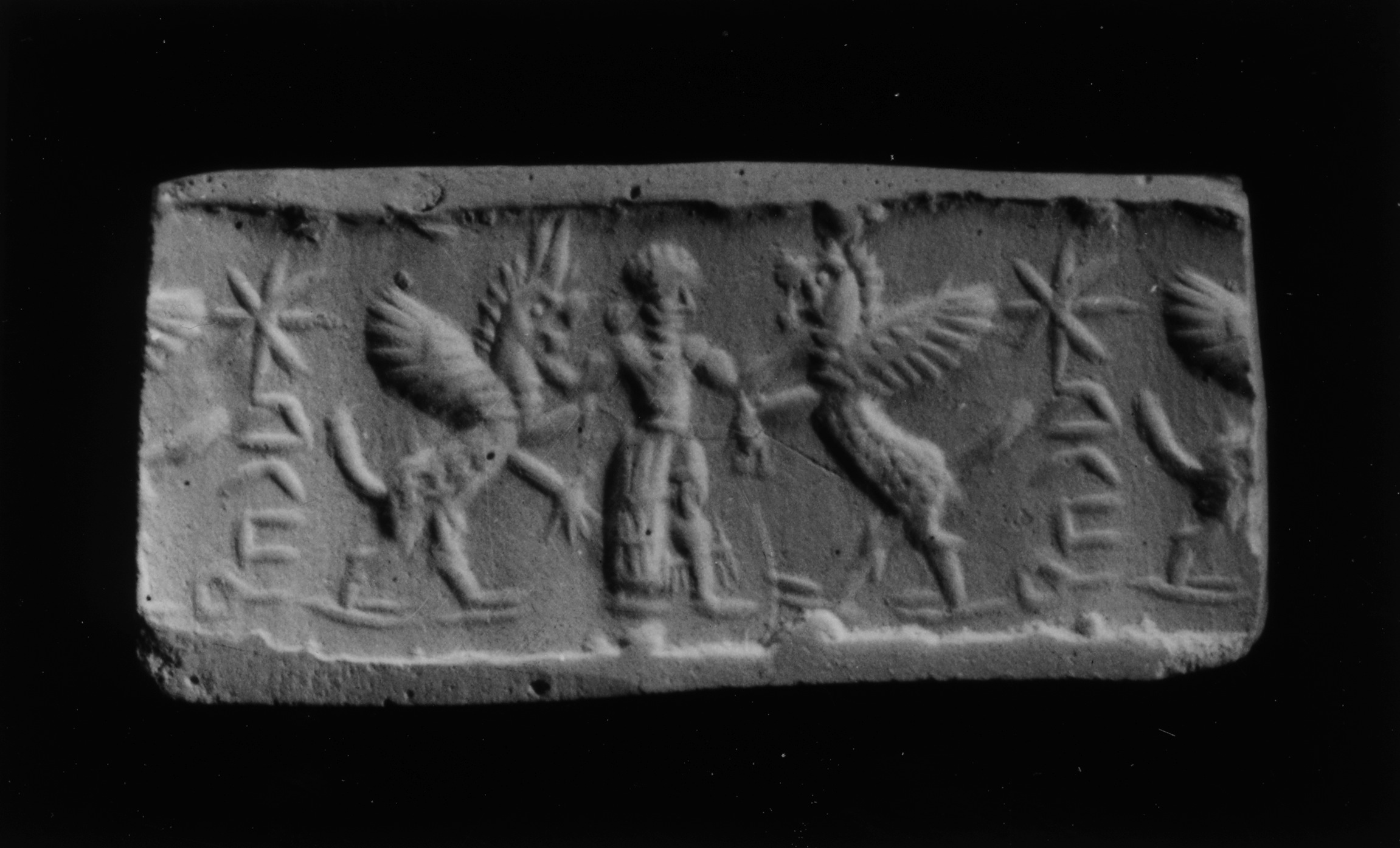
Sumerian art is characterized by stylized human figures, votive statues, and intricate relief carvings. Ziggurats — massive stepped temple towers — were the architectural centerpieces of Sumerian cities, symbolizing the connection between earth and heaven. Decorative arts included cylinder seals — small engraved cylinders rolled across clay to leave an impression — which served as personal signatures and are among the most studied artifacts of the ancient Near East.
Babylon: Empire, Law, and Culture
Rising to prominence around 1894 BCE, Babylon became one of the most powerful and culturally sophisticated cities of the ancient world. Under rulers like Hammurabi and Nebuchadnezzar II, the Babylonian Empire left an indelible mark on history.
The Code of Hammurabi and Early Legal Systems
The Code of Hammurabi, dating to around 1754 BCE, is one of the oldest and most complete written legal codes in existence. Inscribed on a massive stone stele, it contained 282 laws covering trade, property, family relations, and criminal justice. Its famous principle of proportional justice — “an eye for an eye” — reflects an early attempt to standardize law across a complex, multicultural empire.
Babylonian Astronomy and Mathematics
Babylonian scholars made remarkable advances in astronomy and mathematics. They developed a base-60 numerical system (sexagesimal) that still influences how we measure time and angles today — 60 seconds in a minute, 360 degrees in a circle. Babylonian astronomers meticulously tracked celestial movements, accurately predicting eclipses and developing early star catalogs.
Babylonian Artifacts in the Slemani Collection
The Slemani Museum collection includes Babylonian-era clay tablets, administrative seals, and decorative objects that reflect the sophistication of Babylonian urban life. These artifacts offer insight into trade networks, religious practices, and the daily rhythms of one of the ancient world’s greatest metropolises.
Assyrian Empire: Power and Artistic Mastery
The Assyrians built one of the ancient world’s most powerful and feared empires, dominating the Near East from approximately 900 to 612 BCE. Known for their military prowess, they were equally accomplished artists, architects, and administrators.
Neo-Assyrian Cylinder Seals and Their Meaning
Neo-Assyrian cylinder seals are among the most prized artifacts in the Slemani Museum collection. These small engraved cylinders — typically made from stone, shell, or metal — were rolled across wet clay to create detailed impressions. They served as personal identification, legal authentication, and religious talismans. The imagery on Assyrian seals commonly depicts deities, mythological creatures, royal hunts, and ritual ceremonies, providing a vivid window into Assyrian beliefs and social hierarchies.
Assyrian Stone Reliefs: War, Royalty, and Ritual
Assyrian palace reliefs are among the most impressive artistic achievements of the ancient world. Carved in low relief on large limestone panels, they depicted royal hunts, military campaigns, and religious ceremonies with extraordinary detail and dynamism. These works were not merely decorative — they were powerful political statements, designed to project the might and divine favor of Assyrian kings.
The Fall of the Assyrian Empire
At its height, the Assyrian Empire stretched from Egypt to the Persian Gulf. Its capital, Nineveh, was the largest city in the world. Yet by 612 BCE, a coalition of Babylonians and Medes had destroyed Nineveh, bringing the empire to a sudden and dramatic end. The fall of Assyria remains one of the most studied geopolitical collapses of the ancient world.
How Slemani Museum Preserves Mesopotamian Heritage
The Prehistory Gallery: From Stone Age to Early Civilization
Opened in 2021, the museum’s Prehistory Gallery traces human history in the Kurdistan Region from the earliest Stone Age settlements through the emergence of the first complex societies. The gallery incorporates themes of climate change and environmental adaptation, showing how ancient communities responded to shifting conditions — a narrative that resonates powerfully with contemporary challenges.
Protecting Artifacts from Looting and Conflict
The Kurdistan Region of Iraq has faced significant challenges in protecting its archaeological heritage, particularly in the wake of conflicts that saw widespread looting of cultural sites across Iraq. Slemani Museum has played a critical role in recovering and preserving artifacts, working with international organizations to catalog collections and prevent illicit trafficking of cultural property.
FAQ: Ancient Mesopotamia for Students and Visitors
What civilizations existed in ancient Mesopotamia?
The major civilizations of ancient Mesopotamia include the Sumerians, Akkadians, Babylonians, Assyrians, and Chaldeans, spanning roughly from 4500 BCE to 539 BCE.
Who invented writing?
Writing was invented by the Sumerians of ancient Mesopotamia around 3200 BCE in the form of cuneiform script, initially used for record-keeping and later expanded to literature and science.
What is the significance of cylinder seals?
Cylinder seals were personal identification and authentication devices used across the ancient Near East. They are among the most valuable sources of information about ancient Mesopotamian art, religion, and social organization.
Can I see Mesopotamian artifacts at Slemani Museum?
Yes. Slemani Museum holds a significant collection of Mesopotamian artifacts including cuneiform tablets, Neo-Assyrian cylinder seals, Babylonian clay objects, and stone reliefs. Admission is free. The museum is open Saturday through Thursday, 9:00 AM to 1:00 PM.
