
Kurdish Traditional Clothing: Men, Women & Regional Styles Explained
Traditional Kurdish clothing is one of the most visually distinctive textile traditions in the Middle East. Worn for centuries across a vast geographic area spanning modern Iraq, Iran, Turkey, and Syria, Kurdish traditional clothing reflects regional identity, tribal affiliation, social status, and deep cultural pride. Understanding these garments is a way of reading Kurdish history itself.
The Significance of Dress in Kurdish Culture
Clothing in Kurdish culture is far more than a practical covering. Traditional garments are tied to:
- Regional identity — different areas have distinct styles that mark where a person is from
- Tribal and clan affiliation — specific patterns and colours can signal family lineage
- Ceremonial life — weddings, festivals, and religious occasions call for elaborate dress
- Gender and social role — the complexity and ornamentation of a garment often indicates marital status, age, and social standing
In the context of Kurdish identity politics — where Kurdish language, culture, and self-expression have faced suppression at various times — traditional Kurdish clothing has also become a powerful symbol of cultural resistance and continuity. This living tradition sits alongside the ancient material culture documented in the museum’s artifact collection, forming a continuous thread of Kurdish cultural expression from prehistoric times to the present.
Men’s Traditional Clothing
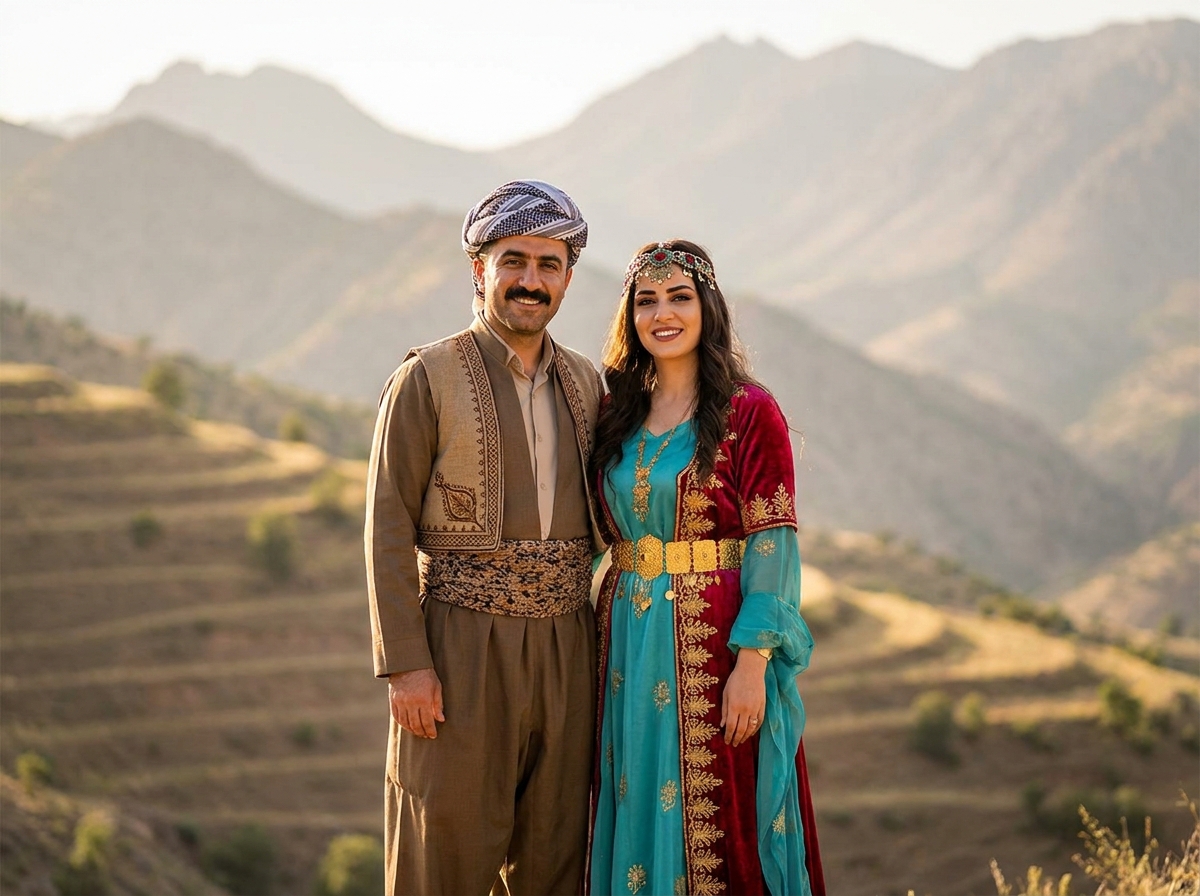
The most iconic element of traditional Kurdish clothing for men is the shal u shapik — a two-piece outfit of wide, baggy trousers gathered at the waist and ankle, worn with a matching loose shirt or jacket. Key features include:
- Wide trousers (shal): Made from wool or cotton, cut extremely full with excess fabric gathered in folds. The volume serves practical purposes — freedom of movement on horseback and in mountainous terrain.
- Cummerbund or waist sash: A long strip of fabric, often in a contrasting colour or with woven patterns, wrapped multiple times around the waist. One of the most personalised parts of the outfit.
- Jacket or vest (kawa): Often embroidered with geometric patterns or adorned with decorative buttons.
- Headwear: Kurdish men’s traditional clothing typically includes the jamadani — a black-and-white checked or plain cloth wrapped around a cap. The style of wrapping can indicate regional origin.
- Footwear: Traditional leather shoes or boots, often with curled tips, worn in rural and ceremonial settings.
In the Iraqi Kurdistan Region around Sulaymaniyah, the colour palette for men’s dress tends toward earth tones — dark brown, deep burgundy, olive green — though festival dress can be considerably more vibrant.
Women’s Traditional Clothing
Kurdish women’s traditional clothing is known for its spectacular use of colour, metallic thread embroidery, and layered construction. A traditional women’s outfit typically consists of:
- Dress (kras): A long, flowing garment in silk, velvet, or heavy cotton, often in bright jewel tones — turquoise, crimson, gold, emerald.
- Wide trousers (shal): Worn beneath the dress, visible at the ankles.
- Jacket or bolero (kawa): A short, fitted jacket heavily embroidered with gold or silver thread, worn over the dress.
- Headdress and veil: Styles vary by region — in some areas, elaborate headdresses decorated with coins, beads, and embroidery; in others, a flowing silk headscarf.
- Belt or sash: A decorative belt or sash that defines the waist, often the most ornamented element of the outfit.
Embroidery is central to traditional Kurdish clothing for women. Patterns are geometric rather than figurative and carry regional signatures — an experienced observer can identify a woman’s home area from the specific motifs and colour combinations in her garments.
Regional Variations Across Kurdistan
Kurdish people’s traditional clothing is not a single uniform tradition. Major regional styles include:
- Kurmanji (Northern Kurdistan): Typically brighter colours and more elaborate headdresses, with significant influence from neighbouring Anatolian textile traditions.
- Sorani (Central/Iraqi Kurdistan, including Sulaymaniyah): The style associated with the museum’s region. Kurdish men’s traditional clothing here uses the shal u shapik with a restrained colour palette; women’s dress is highly embroidered and often uses velvet.
- Southern Kurdistan (Feyli and Kelhuri): Influenced by Persian and Lurish traditions, with long robes and distinctive jewellery styles.
- Yazidi communities: Their own textile traditions, including white garments for religious ceremonies to symbolise purity.
For the broader cultural and historical context behind these regional identities, our guide to Kurdish cultural heritage offers a detailed overview of how Kurdish people have maintained distinct traditions across political borders.
Textiles and Craft Traditions
The production of traditional Kurdish clothing is itself an art form. Key craft traditions include:
- Hand-weaving: Wool and cotton fabric has historically been woven on domestic looms in Kurdish villages.
- Kilim and carpet patterns: The geometric patterns in woven floor coverings and those in embroidered garments often share the same visual vocabulary, reflecting a coherent regional design tradition.
- Metalwork: Silver jewellery — necklaces, headdress ornaments, belt clasps — is an essential part of formal Kurdish dress.
- Natural dyes: Historically, colours came from plant and mineral sources — walnut shells for brown, pomegranate rind for yellow, indigo for blue.
Modern production using synthetic fabrics and machine embroidery has become common for everyday wear, but handmade traditional garments are still produced for weddings and significant ceremonies.
Kurdish Traditional Clothing Today
In Iraqi Kurdistan, traditional dress occupies a complex position between cultural heritage and daily life. It is:
- Worn regularly by older generations, particularly in rural areas
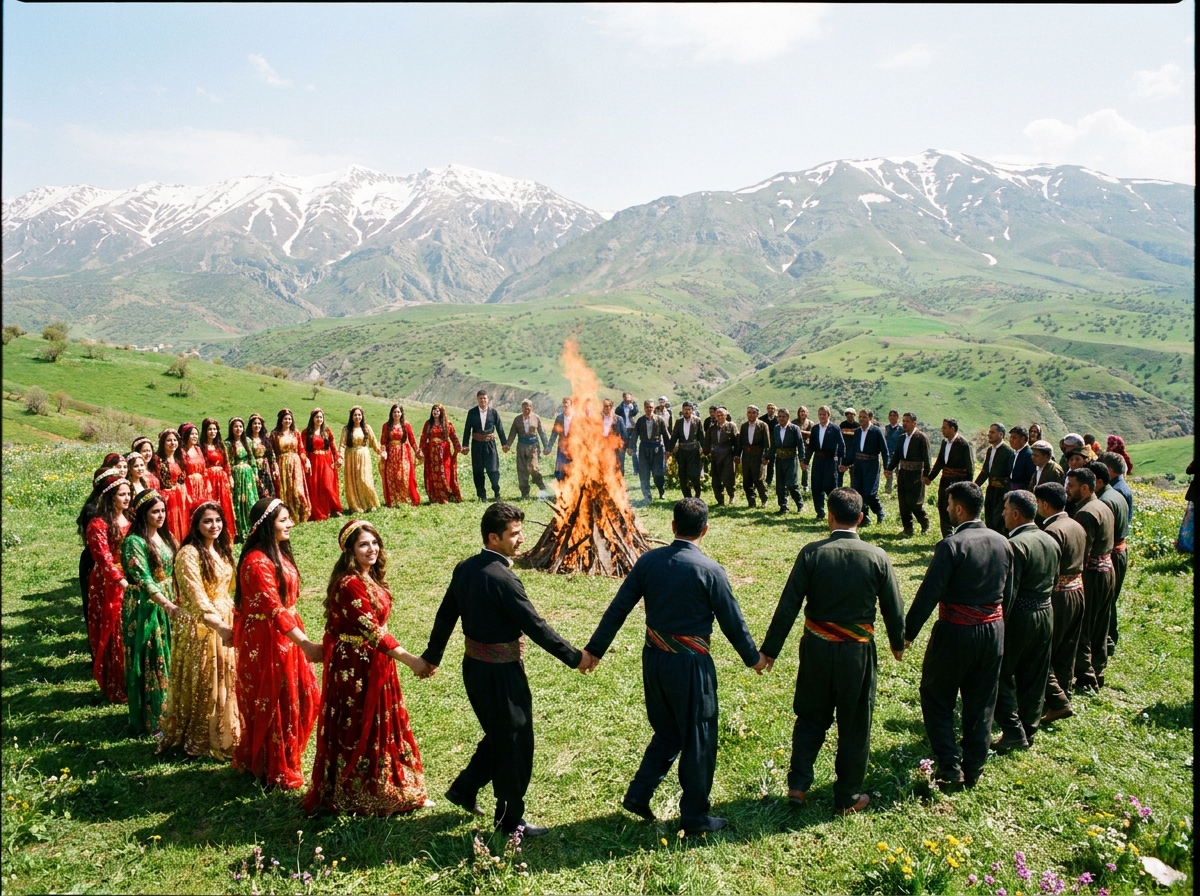
- Reserved for celebrations by many younger urban Kurds — festivals, Newroz (Kurdish New Year), weddings
- Embraced as an identity statement by diaspora Kurds worldwide
- Documented and preserved by institutions like Slemani Museum, which holds historical garments alongside archaeological artifacts
Kurdish traditional clothing for Newroz is particularly vivid. Celebrated on March 21st, Newroz is the occasion when traditional dress appears most visibly across Iraqi Kurdistan. Streets, parks, and public squares fill with families in regional clothing, making it one of the most expressive Kurdish traditional clothing festivals of the year — including traditional Kurdish clothing dance performances — a living demonstration of cultural continuity.
The Slemani Museum and Textile Heritage
The Slemani Museum’s collections include not only archaeological objects but ethnographic material documenting Kurdish daily and ceremonial life. Traditional garments, jewellery, and weaving tools form part of this record — connecting the ancient Mesopotamian history of the region with the living traditions of the Kurdish people who have called it home for centuries.
For visitors to Sulaymaniyah, understanding Kurdish traditional clothing before arriving adds a layer of meaning to what you will see — both inside the museum and in the city itself.
Frequently Asked Questions
What is the traditional Kurdish clothing for men called?
The most iconic traditional Kurdish clothing for men is the shal u shapik — wide baggy trousers worn with a matching shirt or jacket. A cummerbund sash and the jamadani headwrap complete the outfit. Regional colour palettes and embroidery details vary significantly across Kurdistan.
What colours are typical in Kurdish traditional clothing for women?
Kurdish women’s traditional clothing is known for vibrant jewel tones — turquoise, crimson, gold, and emerald. Heavily embroidered jackets and elaborate headdresses are distinctive features of formal dress, particularly in the Sorani-speaking region around Sulaymaniyah.
When is Kurdish traditional clothing worn today?
Traditional Kurdish clothing is most commonly worn during Newroz (Kurdish New Year, March 21), weddings, and cultural festivals. Older generations and rural communities may wear traditional dress more regularly. Diaspora Kurds worldwide wear traditional garments as a statement of cultural identity.
Does the Slemani Museum have a collection of Kurdish traditional clothing?
Yes. The Slemani Museum holds historical garments, jewellery, and weaving tools as part of its ethnographic collection. These objects document Kurdish daily and ceremonial life across different historical periods, alongside the museum’s archaeological holdings.
